


Burnham must calm the markets before he courts the left
Satisfying the taste buds of the dominant ‘left’ should be of secondary consideration for the time being, writes David Buik

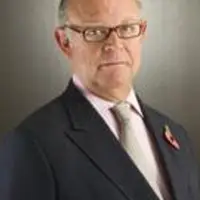
Andy Burnham, and that will be the last time I shall refer to him in such an informal manner, became Prime Minister on 20th July 2026.
Listen to this article
He had no mandate to assume the lofty appointment as First Lord of the Treasury. However, such was the general disappointment in the performance of Sir Keir Starmer, his predecessor, in the previous two years, that it did not take long for Mr Burnham, Louise Haigh and their cohorts to galvanise the support of the Parliamentary Labour Party and the trade union movement to persuade Sir Keir to resign, which he did with great dignity.
It will have taken the best art of three months for Chancellor Healey to put together a Budget, which clearly cannot be too radical, considering the parlous state of the UK’s balance sheet and the need for fiscal discipline. Surely, satisfying the taste buds of the dominant ‘left’ should be of secondary consideration for the time being. The Chancellor should focus on pacifying bond market traders, who need little encouragement to slash prices and drive up yields if provoked. In fairness to John Healey, there is a global bond crisis, which most major economies have been caught up in. This crisis came ‘under a wet sail’ at the time of the COVID-19 pandemic. The situation in the US has, of course, been dramatically exacerbated by its involvement in hostilities involving Ukraine and in the Middle East.
It is important to remember that the UK has a reputation for being profligate with its borrowing to finance its bloated public sector over the years. Hence, the UK’S cost of borrowing is at its highest level in 28 years (10-year Gilt yield 5.39%, 30-year Gilt yield 5.96%). On a pro-rata basis, it is higher than most other democratic countries including Italy and Greece.
However, France is at the crossroads with Le Pen in the lead for next year’s Presidential election and Spain looks to be in a political mess, with Sanchez’s socialist government likely to get rolled over in the forthcoming election and perhaps the same could be said for Germany, where Chancellor Merz is hanging on by his fingernails. Today, Europe does not appear to be in a good place politically.
In passing, I sincerely hope the PM does not waste too much energy trying to negotiate re-entry into the EU. The disruption would be immeasurable and the cost extortionate. He has greater issues to concentrate on for the time being.
These are very challenging times. I am sure HM Treasury would have found every excuse in the book why there could not have been a Budget before 28th October. I am aware that the OBR needs ten weeks to formulate their economic forecasts. However, the UK economy has arrived at a critical juncture. Therefore, I, like many others, do not accept that. Leaving the economy in limbo for so long could have been very risky.
I believe PM Burnham is a very canny politician who knows exactly ‘how many beans make four.’ He has dangled some fairly meaningless carrots in front of the electorate to help with the cost of living, knowing that come the depths of winter, inflation could rage again due to inflated energy, gas and oil prices.
The PM has also offered help to first-time buyers, but not until 2027, good news, and he has promised a revolutionary approach to care for the elderly, to be commended, but again, that is futuristic. Further veiled help with energy bills would also be very welcome. It should not be forgotten that ‘The Spending Review’ does not take place until the New Year. The contents of this review could be vicious from a taxation perspective. No one can feel really comfortable that this Labour administration will make severe and essential welfare cuts.
Welfare, excluding the OAP, is currently costing an unacceptable £121 billion annually. Labour’s track record of keeping the lid on this expenditure has proved inadequate under the Starmer regime; remember the £5 billion cut proposed at the last Budget was withdrawn due to backbench pressure. The Government appears to have little appetite to implement general measurable cuts in public expenditure, with the ‘left’ constantly breathing down the necks of its front bench.
Sadly, ministers in this administration have virtually no business acumen or experience. They need to learn that growth will largely come from private-sector activity and not public services. Business has been screaming for help, with policies that would encourage stimulation and investment. M&S CEO Stuart Machin has been vociferous in the extreme. The City and the LSE’s Dame Julia Hoggett have also been urging the Chancellor to offer investment incentives. All these pleas seem to have fallen on deaf ears.
The word on the street is that PM Burnham is very personable. When asked to present a case for adopting an infrastructure scheme, he apparently gives it his best shot. Well, let’s see a bit more of that. We have thousands of great companies in this country that don't get the recognition or the help they need to attract private-sector investment. Prime Minister, we could use your help.
The UK has seen a massive exodus of the wealthy, who have long been underrated for their contribution to economic growth. It is generally accepted that 26,000 millionaires have left these shores in the past 2 years and the UK’s billionaire count fell from 165 to 156 in a single year. To add fuel to the fire, 6000 entrepreneurs have quit the UK in the same period. This does not augur well. Chancellor, please do not consider a windfall tax for the banks for one moment. It would send the wrong message out to the world of investment. It has taken 17 years to restore their balance sheets. Please do not ‘throw the baby out with the bathwater.’
What of the future? Blondemoney’s Helen Thomas, whose reputation as a political advisor and economist has grown exponentially, believes the forthcoming Budget will be neutral due to fiscal constraints. The Chancellor may offer relief on energy costs, including fuel and, in the same breath, a slew of taxes, including banks and IHT. However, with the Tories and Reform very unlikely to pool their resources at any general election, coupled with the Lib-Dems and the Greens' popularity waning, she believes the PM could call a snap election in the New Year, which, if he won it, could provide the basis of a very left-of-centre administration
On the other hand, some luck, such as the wars in Ukraine and Iran ending, oil dropping to $80 a barrel, bond yields and inflation falling sharply, and bold investment moves like cutting stamp duty, might provide a much-needed platform for growth. Here’s hoping!
____________________
David Buik is a Markets Commentator.
LBC Opinion provides a platform for diverse opinions on current affairs and matters of public interest.
The views expressed are those of the authors and do not necessarily reflect the official LBC position.
To contact us email opinion@lbc.co.uk