
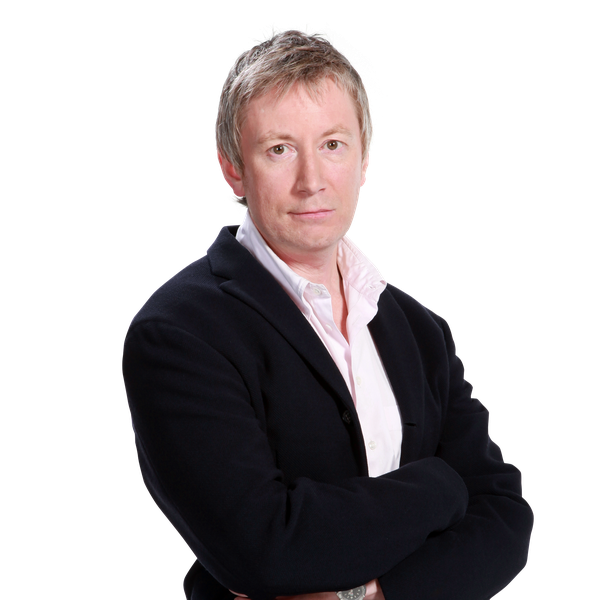


Spain's transport minister says he won't resign over deadly rail disaster - insisting he has 'nothing to hide'
Spain has entered three days of mourning following the collision of two high-speed trains on the Madrid-Seville line caused by a computer failure

Spain's transport minister has insisted he won't resign over the country's deadliest rail crash in more than a decade.
Listen to this article
Óscar Puente told a press conference in Madrid that he had "nothing to hide" as he vowed to get to the bottom of the disaster, saying many questions needed to be answered.
"My duty right now is not to talk about whether I should remain in my position, but to resolve the problem," Mr Puente said.
The transport minister has been facing pressure to step down following the fatal collision, including from political rivals, a trade union and a slew of demonstrators who protested outside the transport ministry on Wednesday night.
At least 69 people were killed and nearly 150 injured after two high-speed trains travelling on the Madrid-Seville line collided due to a computer failure on Wednesday morning.
Read more: Spain's history of train crashes after Toledo disaster death toll reaches 68
The conservative People's Party joined calls for Mr Puente's resignation after trade union CSIF called for the same earlier this week.
But Mr Puente said on Friday he would not be handing in his resignation.
"The easy thing for me would be to leave, but neither that fits with my character nor is it what the Prime Minister has asked me to do," he said.
"I feel immense pain and immense sadness for the victims and their relatives [...] I cannot let this pain paralyse me though. We have to find solutions to this problem."

Mr Puente, said earlier this week that the crash followed what he described as an “inexplicable” instruction from Spain’s central rail command centre after a safety system failed.
He insisted the train engineers were not to blame.
According to Mr Puente, a computer malfunction caused the security system to fail across a 63 km section of track at 8.30am, bringing all trains on that stretch to a halt.
However, the central command centre then instructed a Renfe train to resume its journey without speed restrictions.
It collided with a stationary Iryo train at 8.53am.
Mr Puente said the Renfe train should not have been told to move while a stop signal remained active on the line.
If it was authorised to proceed, he said it should at least have been subject to a reduced speed limit.
Authorities are still examining data to establish the train’s speed, although Puente said it may have been travelling at up to 200 km/h on that section of track.
“I am not attributing responsibility to anyone; I am just stating the facts,” he added.

A huge effort remains underway to comb through the wreckage to find missing people and identify victims of Wednesday's deadly crash.
A former Spanish employment minister and a 24-year-old athlete are among the first victims to be named.
Fatima Báñez, who served as employment minister from 2011 to 2018 under then-prime minister Mariano Rajoy, was confirmed by her party on Thursday as one of the victims.
She is said to have been in one of the worst-affected carriages, according to Spanish reports.
Julieta Gallego, a 24-year-old long jumper, was also confirmed to have died.
A member of Madrid-based club AD Sprint, Ms Gallego had “a life ahead of her that has been unjustly extinguished”, said Raúl Chapado, president of the Royal Spanish Athletics Federation.
Spanish police also confirmed one of their officers died in the collision.
José Manuel Chacón, 31, from Seville, was one of at least five police officers thought to have been travelling on one of the trains that crashed.